An activist with Surfrider Foundation protests offshore oil drilling.
Activists painted their bodies black to appear covered in oil and carried a symbolic oil slick in the form of a dark tarp across Miami Beach today at a rally to protest offshore oil drilling in the wake of the April 20th BP oil accident in the Gulf of Mexico.
Environmentalists, elected officials and business owners warned that the BP spill will be devastating to Florida's coastal ecosystem and wildlife and could spell doom for the tourism industry if the oil reaches South Florida's shores.
The 10 a.m. rally at Lummus Park was organized by the Sierra Club, Sufrider Foundation Miami Chapter and several other environmental organizations.

Florida State Sen. Dan Gelber (D-Miami Beach) urged support for a proposed constitutional amendment that would ban exploration, drilling, oil extraction and production up to ten miles off Florida's shores. "We do not want oil rigs near our shore," the senator said, with the sandy beach and sparkling Atlantic as a backdrop.
Recent reports indicate that the oil spill in the Gulf of Mexico could reach South Florida's shores within weeks if winds push it into a loop ocean current that winds around the southern tip of the state. Miami Beach Commissioner Jerry Libbin said emergency management officials should be preparing a disaster management plan.
The damage, however, is already done, according to an attorney for the Sierra Club, Kent Harrison Robbins. He said the chemicals that BP oil giant is using to disperse the oil in the Gulf of Mexico is creating a "toxic brew" that will "kill, maim, and destroy marine mammals, plankton and coral reefs."
Miami Beach Commissioner Michael Gongora said he is angry. "We need to do what we can to prevent another tragedy like this from happening."
Among the business owners who called for measures to prevent offshore oil drilling was David Wallack, owner of Mango's Tropical Cafe, a popular South Beach nightspot. He said an oil slick on any of Florida's coasts would be more disruptive in the long term than any hurricane. "Now we're talking about cities that can be devastated not for days, weeks or months, but years," he said. Quoting singer Bob Dylan, Wallack said, "The answer, my friend, is blowin' in the wind."
As activists rallied on Miami Beach today, in Washington DC the Senate Committee on Energy and Natural Resources held a hearing on offshore gas and oil development. Protests against BP are planned nationwide for tomorrow, Wednesday, by the Seize BP Campaign, which has begun a petition supporting the seizure of BP's assets to provide comprehensive compensation and relief for all affected people and for cleaning up the environment. A rally is scheduled for 6 p.m. Wednesday at the federal courthouse, Broward Blvd., Fort Lauderdale.
 A few weeks ago we found signs that something was munching on the leaves of the Meyer Lemon tree in our backyard. The culprit, it turned out, was a strange-looking caterpillar called an "Orange Dog" (because of their appetite for citrus tree leaves) that would one day make a marvelous transformation into a Giant Swallowtail Butterfly.


 Empty Giant Swallowtail chrysalis
  Giant Swallowtail chrysalis Day 4
 Giant Swallowtail Butterfly chrysalis Day 1
 Orange Dog caterpillar turning into a chrysalis
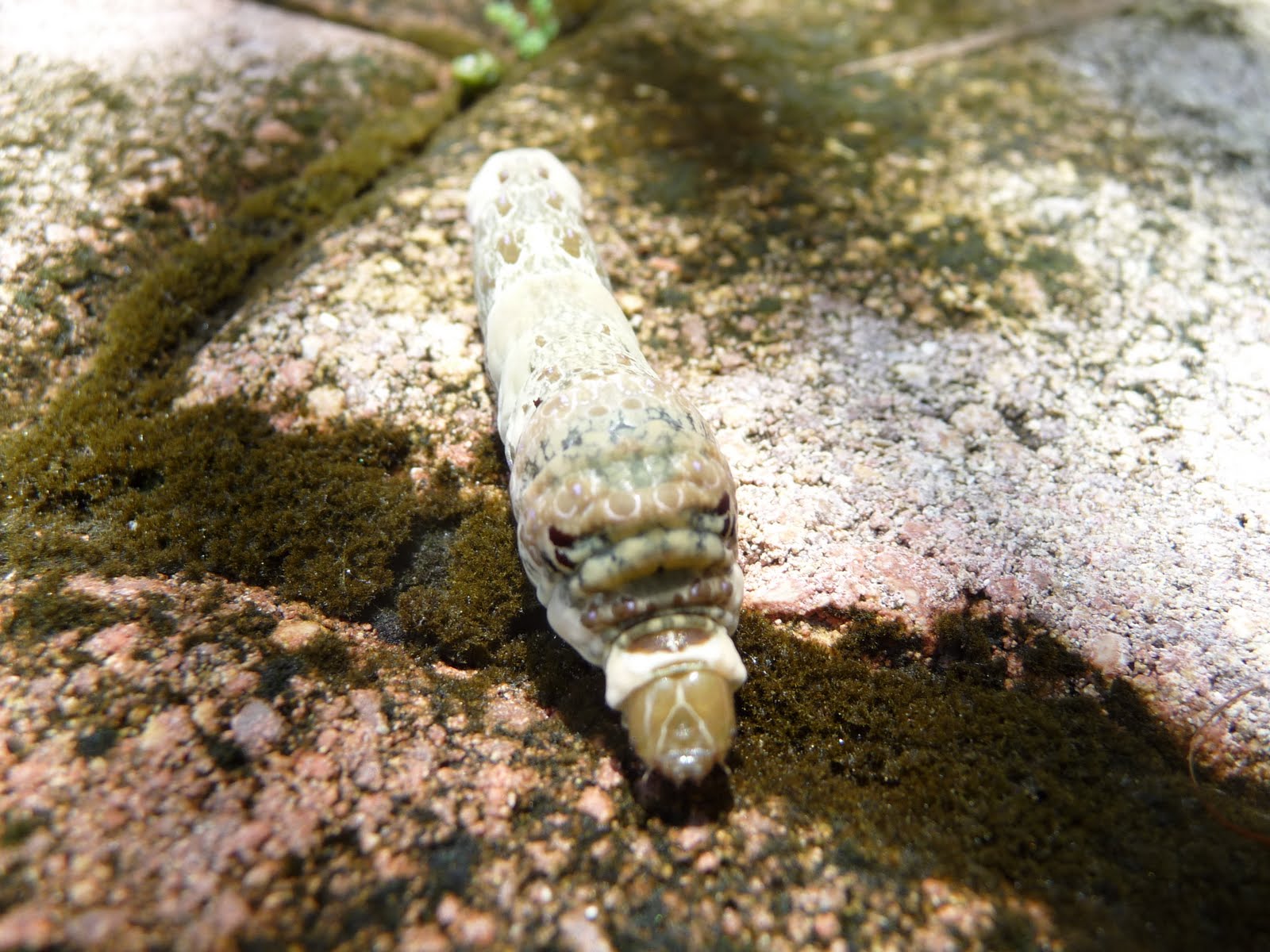 Orange Dog caterpillar
 Evidence of the "Orange Dog" caterpillar eating the leaves of the tree.
  Our Meyer Lemon Tree